

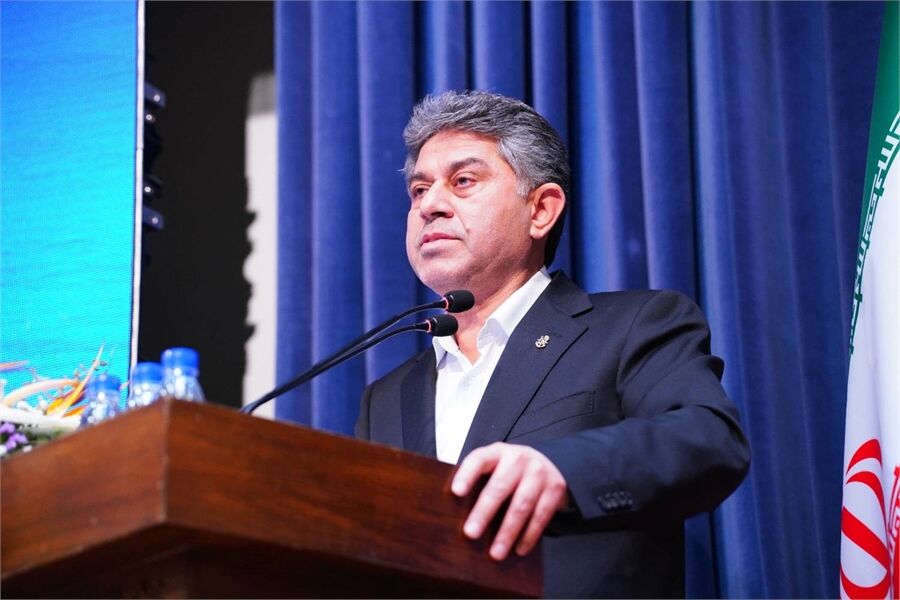
Mohammad Shakibinasab, at the ceremony commemorating World Maritime Day, expressing appreciation for the efforts of seafarers, port employees, private sector activists, and all stakeholders of the country’s maritime industry, stated: “Seafarers are the unsung heroes of the maritime economy who, with knowledge, expertise, responsibility, sacrifice, and courage, have kept one of the most important economic arteries of the country active, and in the current conditions have not allowed maritime transport to face any interruption.”
Ports of the Country; the Front Line of Supply and Food Security
Referring to the strategic role of maritime transport in the country’s foreign trade, Shakibinasab added: “More than 90 percent of Iran’s foreign trade by weight and more than 80 percent by value is carried out through maritime transport, and for this reason, the continuity of this sector’s activity plays a decisive role in the sustainability of the country’s economy.”
He continued: “During the recent imposed war, the country’s ports did not stop their activities despite the attacks carried out, and in some cases, even at most two hours after an attack, the cycle of loading and unloading operations resumed.”
The Managing Director of the Ports and Maritime Organization, referring to the loading and unloading of more than 73 million tons of cargo during this period, said: “Approximately 13 million and 200 thousand tons of this amount were essential goods that were unloaded from ships during this time, and a significant portion of the country’s essential needs was met through this very capacity.”
Shakibinasab described this performance as the result of the solidarity and cooperation of the Ports and Maritime Organization, port managers, the private sector, and all activists of the maritime and port industry, emphasizing: “If this solidarity, cooperation, and alignment did not exist, achieving such performance under difficult conditions would not have been possible.”
“From Policy to Implementation”; the Axis of Movement for Advancing Maritime Excellence
Referring to this year’s theme of the International Maritime Organization, titled “From Policy to Implementation; Advancing Maritime Excellence,” he stated: “The selection of this theme for the years 2026 and 2027 indicates the importance of reducing the gap between policy-making and the implementation of policies.”
The Deputy Minister of Roads and Urban Development added: “In all maritime activities, whether in hardware or software fields, challenges and deficiencies must first be identified and pathologized, then goal-setting, prioritization, and planning for the implementation of measures must be carried out.”
He clarified: “In the country’s maritime industry, from shipbuilding and training to maritime operations, ship separation and berthing, and the loading and unloading of cargo, there is room for improving processes, and the enhancement of performance must ultimately lead to increased maritime safety and security.”
Shakibinasab described safety as one of the main priorities of the Ports and Maritime Organization, saying: “Safety is the red line of the organization’s management team, and ultimately, the implementation of maritime policies and the improvement of processes must lead to the enhancement of maritime safety and security.”
He also listed the renewal of the fleet, the development of infrastructure, private sector investment, and the use of modern technologies among the organization’s future priorities.
The Necessity of Renewing the Fleet and Port Equipment
Referring to the capacity of the country’s 5,800-kilometer coastal strip, the Managing Director of the Ports and Maritime Organization stated: “To effectively utilize maritime capacities and transform the sea into a driver of development and economic power for the country, the renewal of the maritime fleet and port equipment is a necessity.”
Shakibinasab added: “The average age of the maritime fleet in the Caspian Sea is more than 35 years, and the average age of the ports’ loading and unloading equipment is more than 29 years; therefore, we must pursue the process of renewing the fleet and equipment with a serious and accelerated program.”
He emphasized the pivotal role of the private sector on this path, saying: “Without the participation and cooperation of the private sector, success in the development of the maritime industry will not be achieved, and we must utilize the capacity of investors for the development of the service fleet, the transport fleet, and port equipment.”
Iran’s Ports Moving Toward the Third and Fourth Generation
Stating that today’s port is no longer merely a place for loading and unloading, Shakibinasab said: “Ports must be transformed into logistics, industrial, commercial, and service centers in accordance with the conditions of the modern world.”
He added: “In the Seventh Development Plan, a goal has also been set for the country’s ports to play their role at the third-generation level, and the ports of Shahid Rajaee, Imam Khomeini and Amirabad must play their role as third-generation ports by the end of the Seventh Plan.”
Smartening; the Inevitable Path of the Future of Ports
Shakibinasab described smartening as one of the necessities of transformation in ports, saying: “The duration of a ship’s stay in port and the processes related to it must be seriously reduced, and this is possible through the use of systems, integrated management of activities and processes, and the development of electronic services.”
Referring to the measures taken in the field of integrating port and maritime systems, he added: “The Ports and Maritime Organization has begun a good movement in this field, but we still need greater integration of systems in providing services and exchanging information, and we must move away from traditional processes.”
The Managing Director of the Ports and Maritime Organization described the electronic exchange of information with the Iran Customs Administration as one of the important measures in this field, saying: “The use of modern technologies, artificial intelligence, and technological capacities for collecting, receiving, categorizing, and analyzing information must becom one of the main axes of transformation in ports.”
He noted: “A smart port is a port that reduces time and cost for cargo owners, ship owners, and investors.”
Productivity and Reducing the Dwell Time of Ships in Ports
Shakibinasab described the development of port and maritime infrastructure as one of the important factors in increasing productivity, saying: “Increasing productivity in maritime and port activities can lead to a reduction in the dwell time of ships and ultimately a reduction in the costs imposed on ships and cargo.”
He announced the drafting and approval of the “Productivity Regulations” and added: “These regulations are at the notification stage, and their implementation can strengthen the path of increasing productivity in the country’s ports.”
Safeguarding Human Capital; Beyond Attention to Livelihood
Emphasizing that seafarers are the most important asset of the maritime industry, the Managing Director of the Ports and Maritime Organization said: “Ships, ports, advanced equipment, and modern technologies cannot accomplish their missions without specialized and committed human resources.”
Shakibinasab added: “One of the most important duties of the organization, as the policy-making body in the field of developing maritime activities and the maritime economy, is the safeguarding of human capital; of course, this safeguarding does not merely mean attention to livelihood, and continuous training, improving the working and living conditions of seafarers, and enhancing workplace safety must also be considered.”
He clarified: “This notion that completing a university or training course is sufficient for an entire period of service is not correct; because the maritime industry is changing in step with the advancement of science and technology, and continuous training must be pursued as an inseparable part of maritime activities.”
Strengthening Maritime Diplomacy and Active Presence in International Forums
Referring to the measures taken in the field of maritime diplomacy, the Managing Director of the Ports and Maritime Organization stated: “The Ports and Maritime Organization, the Ministry of Foreign Affairs, and Iran’s representatives at the International Maritime Organization have reflected the issues related to the attacks carried out against the country’s maritime industry and maritime transport to international forums through diplomatic channels and through official documents and reports.”
He added: “The country’s maritime diplomacy efforts to explain the existing realities will continue, and we hope that the rightfulness of the Islamic Republic of Iran and the country’s maritime and port community will be further clarified in international forums.”
Investment, Technology, and Maritime Culture; Three Axes for Building a Strong Iran at Sea
In conclusion, emphasizing the necessity of a cohesive movement for the sea-based development of the country, Shakibinasab said: “To build a strong Iran in the maritime domain, investment in ports must be increased, the fleet must be developed and renewed, specialized human resources must be trained in accordance with the needs of the day, specialized training must be enhanced, and modern technologies must enter maritime and port processes.”
He noted: “Alongside all these measures, strengthening maritime culture in the country is also a necessity; because utilizing Iran’s vast maritime capacities and transforming these capacities into a sustainable economic advantage requires a national outlook and forward-looking planning in the maritime domain.”








جدیدترین اخبار پربحث